
EV Maintenance vs. Traditional Car Maintenance: A Professional Guide for Swedish Vehicle Owners
EV Maintenance vs. Traditional Car Maintenance: A Professional Guide for Swedish Vehicle Owners
As Sweden continues its transition toward sustainable transportation, electric vehicles (EVs) are becoming an increasingly common sight on roads throughout Stockholm and across the country. While EVs offer numerous advantages, including lower operating costs and reduced environmental impact, many owners still have questions regarding maintenance requirements and long-term vehicle care.
At TuneTec.se, we understand that maintaining an electric vehicle requires a different approach than servicing a conventional petrol or diesel-powered car. This guide explains the key differences, common EV-related issues, and why professional maintenance remains essential for preserving vehicle performance, safety, and reliability.
The Evolution of Vehicle Maintenance in Sweden
The Swedish automotive market is experiencing a significant transformation. Manufacturers such as Tesla, Polestar, Volvo, Volkswagen, BMW, and Mercedes-Benz continue to expand their electric vehicle offerings, driving increased demand for specialized EV maintenance and diagnostic services.
One of the most common misconceptions among vehicle owners is that electric vehicles require no maintenance at all. While EVs eliminate several traditional service requirements, they still depend on regular inspections, software monitoring, and component evaluations to ensure optimal operation.
EV Maintenance vs. Traditional Car Maintenance
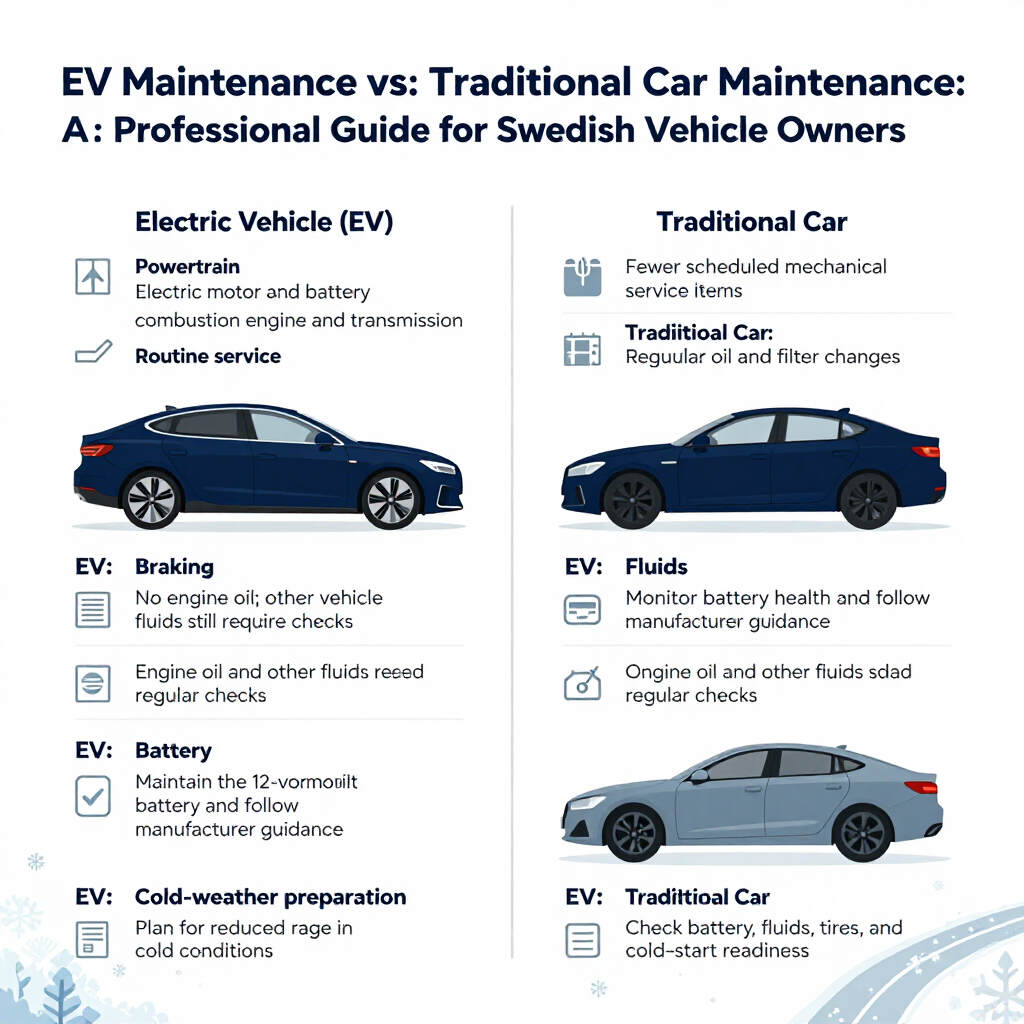
Understanding the differences between conventional and electric vehicle servicing is essential for making informed maintenance decisions.
Traditional Internal Combustion Engine (ICE) Vehicles
Conventional vehicles rely on complex mechanical systems containing hundreds of moving components. These systems require routine maintenance to prevent wear and maintain efficiency.
Typical maintenance services include:
- Engine oil and filter changes
- Spark plug replacement
- Fuel system servicing
- Timing belt inspections and replacement
- Transmission maintenance
- Exhaust system repairs
- Cooling system servicing
- Engine diagnostics and mechanical repairs
Because of the number of mechanical components involved, maintenance costs can increase significantly over the life of the vehicle.
Electric Vehicles
Electric vehicles are mechanically simpler and contain fewer moving parts. As a result, several traditional maintenance requirements are eliminated.
EVs typically do not require:
- Engine oil changes
- Spark plug replacement
- Fuel filter servicing
- Timing belt replacement
- Exhaust system maintenance
However, electric vehicles still require professional attention in several critical areas:
- High-voltage battery health monitoring
- Brake system inspections
- Tire maintenance and alignment
- Thermal management system checks
- Software updates
- Suspension evaluations
- Charging system diagnostics
Although maintenance intervals are often reduced, professional servicing remains essential for long-term reliability and performance.
Common Electric Vehicle Problems in Sweden
Sweden's climate presents unique challenges for electric vehicle owners. Understanding potential issues can help prevent costly repairs and unexpected downtime.
1. Reduced Battery Performance During Winter
Cold temperatures can temporarily affect battery efficiency and vehicle range.
Common observations include:
- Reduced driving range
- Increased energy consumption
- Longer charging times
- Lower charging efficiency
Regular battery health assessments help ensure the battery system continues to operate within manufacturer specifications.
2. Charging System Faults
Charging-related issues represent one of the most common concerns among EV owners.
Potential problems include:
- Slow charging speeds
- Charging interruptions
- Connection failures
- Charging port malfunctions
- Communication errors between charger and vehicle
Advanced diagnostic equipment is often required to accurately identify and resolve these faults.
3. Brake System Corrosion
Because electric vehicles rely heavily on regenerative braking, traditional friction brakes may be used less frequently. While this reduces brake wear, it can increase the risk of corrosion, particularly during Swedish winters.
Common issues include:
- Rust buildup on brake discs
- Sticking brake calipers
- Uneven braking performance
- Brake system deterioration caused by moisture and road salt
Regular brake inspections remain a critical part of EV maintenance.
4. Accelerated Tire Wear
Electric vehicles typically generate instant torque and carry additional battery weight. These characteristics can contribute to faster tire wear compared to conventional vehicles.
Routine inspections should monitor:
- Tread depth
- Tire pressure
- Wheel alignment
- Uneven wear patterns
Maintaining proper tire condition not only improves safety but also maximizes energy efficiency.
5. Software and Electronic System Issues
Modern electric vehicles depend extensively on sophisticated software and electronic control systems.
Potential concerns include:
- Sensor malfunctions
- Warning light activation
- Driver assistance system errors
- Software communication faults
- Battery management system alerts
Professional diagnostic scanning is essential for identifying and resolving these issues before they develop into larger problems.
How Often Should an Electric Vehicle Be Serviced?
Service intervals vary depending on the manufacturer, vehicle model, and driving conditions. However, most EV manufacturers recommend scheduled inspections annually or after a specified mileage interval.
A comprehensive EV service should include the following:
Battery Health Assessment
The battery is the most valuable component of an electric vehicle.
A professional inspection evaluates:
- Battery condition and degradation levels
- Charging efficiency
- Thermal management performance
- Cell balancing and overall battery health
Regular monitoring helps identify performance concerns early and contributes to longer battery lifespan.
Brake System Inspection
Despite reduced mechanical wear, brake systems remain a critical safety component.
Inspections should include:
- Brake pads and discs
- Hydraulic systems
- Brake fluid condition
- Caliper functionality
Tire and Suspension Evaluation
Because EVs are often heavier than traditional vehicles, suspension and tire components should be inspected regularly.
Maintenance checks should include:
- Tire condition and wear patterns
- Wheel alignment
- Suspension components
- Steering system performance
Diagnostic and Software Review
Advanced electronic systems require ongoing monitoring and periodic updates.
A professional diagnostic assessment helps detect:
- Hidden fault codes
- System communication errors
- Performance irregularities
- Required software updates
These preventative checks can significantly reduce the risk of future repairs.
Choosing the Right Garage for Tesla and EV Repairs
Not all workshops possess the expertise, equipment, or training necessary to service modern electric vehicles.
Selecting a garage with EV-specific knowledge provides several advantages:
✔ Advanced diagnostic capabilities
✔ Experience with high-voltage systems
✔ Specialized maintenance procedures
✔ Battery health evaluation expertise
✔ Up-to-date knowledge of modern vehicle technologies
As electric vehicle technology continues to evolve, choosing a qualified service provider becomes increasingly important.
Why Choose TuneTec.se for EV Maintenance and Diagnostics?
At TuneTec.se, we are committed to supporting the next generation of vehicle technology through professional diagnostics, maintenance, and repair services.
Our approach focuses on:
- Accurate fault diagnosis
- Preventative maintenance strategies
- Advanced vehicle diagnostics
- Battery system monitoring
- Professional repair solutions
- Long-term vehicle reliability
Whether you drive a Tesla, Polestar, Volvo, Volkswagen, BMW, Mercedes-Benz, Hyundai, Kia, or another electric vehicle, our team is dedicated to helping you maintain optimal performance throughout every season.
Conclusion
Electric vehicles have simplified many aspects of vehicle ownership, but they are not maintenance-free. Regular inspections, battery health assessments, software diagnostics, brake servicing, and tire maintenance remain essential for preserving performance, safety, and long-term value.
As demand for EV Repair Sweden, Electric Car Service Stockholm, and Tesla Garage Sweden continues to grow, vehicle owners increasingly benefit from working with workshops that understand the unique requirements of modern electric vehicles.
At TuneTec.se, we provide the expertise, diagnostic technology, and professional service needed to help your electric vehicle perform at its best, today and for years to come.
Frequently Asked Questions About EV Maintenance and Repairs
Find answers to common questions about electric vehicle servicing, battery health, diagnostics, and professional EV repairs in Sweden.
Do electric vehicles require regular maintenance?
Yes. Although electric vehicles have fewer moving parts than conventional petrol or diesel vehicles, they still require regular maintenance. Routine inspections should include battery health checks, brake system evaluations, tire inspections, cooling system checks, and software diagnostics to ensure safe and efficient performance.
How often should an electric vehicle be serviced?
Most electric vehicle manufacturers recommend servicing every 15,000 to 30,000 kilometers or at least once per year. Service intervals may vary depending on the vehicle model, driving conditions, and manufacturer recommendations.
What are the most common electric car problems in Sweden?
Common EV issues in Sweden include reduced battery efficiency during winter, charging system faults, brake corrosion caused by road salt, increased tire wear, and software-related warning messages. Regular inspections help identify these issues before they develop into costly repairs.
Do electric vehicles need oil changes?
No. Electric vehicles do not have a traditional internal combustion engine, meaning they do not require engine oil changes, oil filters, or related engine maintenance services.
How long does an EV battery typically last?
Modern EV batteries are designed to last many years and often remain highly effective well beyond 150,000 kilometers. Battery lifespan depends on driving habits, charging practices, environmental conditions, and regular maintenance.
Does cold weather affect electric vehicle performance?
Yes. Swedish winter temperatures can temporarily reduce battery range and increase charging times. However, modern battery management systems help optimize vehicle performance and protect battery health in colder climates.
Why do electric vehicles still need brake inspections?
While regenerative braking reduces wear on brake components, moisture and road salt can cause corrosion on discs and calipers. Regular brake inspections are essential for maintaining safe braking performance.
What is included in an EV diagnostic service?
An EV diagnostic service typically includes fault code scanning, battery health analysis, charging system testing, software evaluations, sensor inspections, and electronic control system diagnostics.
Can TuneTec service Tesla and other electric vehicle brands?
Yes. TuneTec provides professional diagnostics, maintenance, and repair services for Tesla and many other electric vehicle manufacturers including Volvo, Polestar, BMW, Mercedes-Benz, Volkswagen, Hyundai, Kia, and more.
Why choose TuneTec for EV repair and maintenance in Sweden?
TuneTec combines advanced diagnostic technology, experienced technicians, and professional maintenance solutions to help electric vehicle owners maximize performance, reliability, safety, and battery longevity.
